
Mold Removal and Mold Remediation
Mold removal and mold remediation are closely related, but they aren’t exactly the same. Mold removal focuses on removing visible mold and affected materials, while mold remediation addresses the larger problem—including the moisture conditions that allowed the mold to grow.
Remediation may involve finding and correcting the moisture source, containing the affected area, and cleaning or removing contaminated materials to help prevent the mold from returning.
Small, isolated mold problems may only require cleaning and removal. Larger areas, recurring or hidden mold, and mold caused by significant water damage may require professional mold remediation.
In simple terms: mold removal removes the mold; mold remediation addresses the mold and the conditions behind it.
Need Help With Mold Remediation?
Get connected with a mold remediation professional who can help you determine the right next step.
Household Mold
Need Help With Mold Remediation?
Get connected with a mold remediation professional who can help you determine the right next step.
How to Check for Mold in Your House
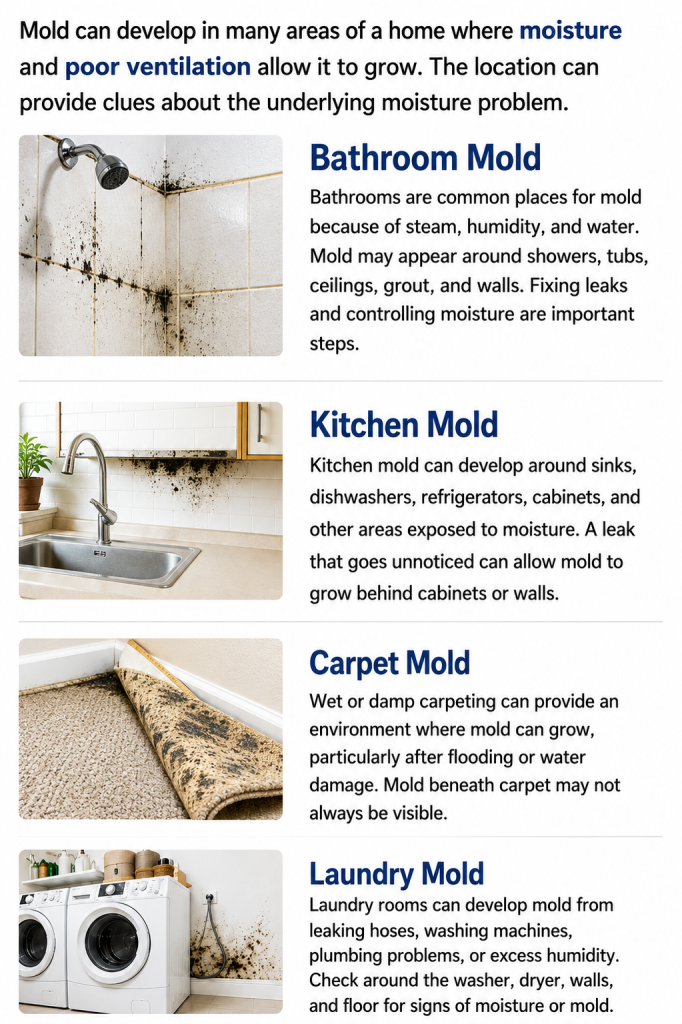
If you think you may have mold in your home, look for visible mold, musty odors, excess moisture, and signs of water damage. Mold isn’t always easy to spot and may grow in hidden areas.
Look for Visible Mold
Check for dark or unusual spots, discoloration, staining, fuzzy growth, or mold around caulk, grout, walls, and ceilings. Mold can appear in different colors, so it isn’t always black or green.
Check For Musty Odors
A persistent musty or earthy smell may indicate moisture or mold, particularly in basements, bathrooms, kitchens, laundry areas, and rooms with previous water damage.
Look for Moisture and Water Damage
Look for water stains, leaks, condensation, damp walls or carpeting, peeling paint, warped flooring, and previous flooding. These don’t necessarily mean mold is present, but they can point to conditions where mold may develop.
Check Common Problem Areas
Inspect bathrooms, basements, attics, kitchens, laundry rooms, and areas around plumbing. Also check behind cabinets, appliances, furniture, and carpeting where moisture can go unnoticed.
If mold repeatedly returns to the same area, an underlying moisture problem may need to be addressed.
Need Help With Mold Remediation?
Get connected with a mold remediation professional who can help you determine the right next step.
What If You Suspect Hidden Mold?
Professional help may be appropriate when mold covers a large area, keeps returning, may be hidden, or is associated with significant water damage. Persistent musty odors or a moisture source you can’t identify can also indicate a larger problem.
If mold appears in multiple areas or you’re unsure how extensive the problem is, a professional can help evaluate the situation and determine the appropriate next step.
When Should You Call a Mold Remediation Professional?
Professional help may be appropriate when mold covers a large area, keeps coming back, or may be hidden behind walls, under flooring, or inside building materials. Significant water damage, persistent musty odors, or an unidentified moisture source can also indicate a larger problem.
If mold is present in multiple areas or you’re simply unsure how extensive the problem is, a professional evaluation can help determine what you’re dealing with and what needs to be done.
Need Help With Mold Remediation?
Get connected with a mold remediation professional who can help you determine the right next step.
What Is Mold Toxicity?
“Mold toxicity” is a term commonly used when people search for information about mold exposure, black mold symptoms, and possible health effects from mold. Some molds can produce substances called mycotoxins, but not all molds do, and you can’t tell whether mycotoxins are present simply by looking at mold.
What Are Signs of Mold Exposure?
Some people exposed to mold may experience sneezing, a stuffy or runny nose, coughing, wheezing, irritated eyes, skin irritation, or worsening asthma symptoms, particularly if they are sensitive or allergic to mold.
What About Black Mold and Mold Poisoning?
“Black mold” and “toxic mold” aren’t specific medical diagnoses, and finding mold doesn’t automatically mean someone has been “poisoned.” Because symptoms can have many possible causes, persistent or concerning symptoms should be discussed with a healthcare professional.
Mold Remediation Cost.
The cost of mold remediation can vary significantly depending on the size and location of the affected area, materials involved, extent of water damage, and the source of the moisture problem.
A small, isolated mold problem may require a very different approach from mold that has spread to multiple areas, damaged building materials, or developed behind walls or flooring.
Because every situation is different, the extent of the mold problem usually needs to be evaluated before the appropriate remediation—and its potential cost—can be determined.
Need Help With Mold Remediation?
Get connected with a mold remediation professional who can help you determine the right next step.